Isafjördur, Iceland, 7/24/2023, National Geographic Explorer
Aboard the
National Geographic Explorer
Arctic
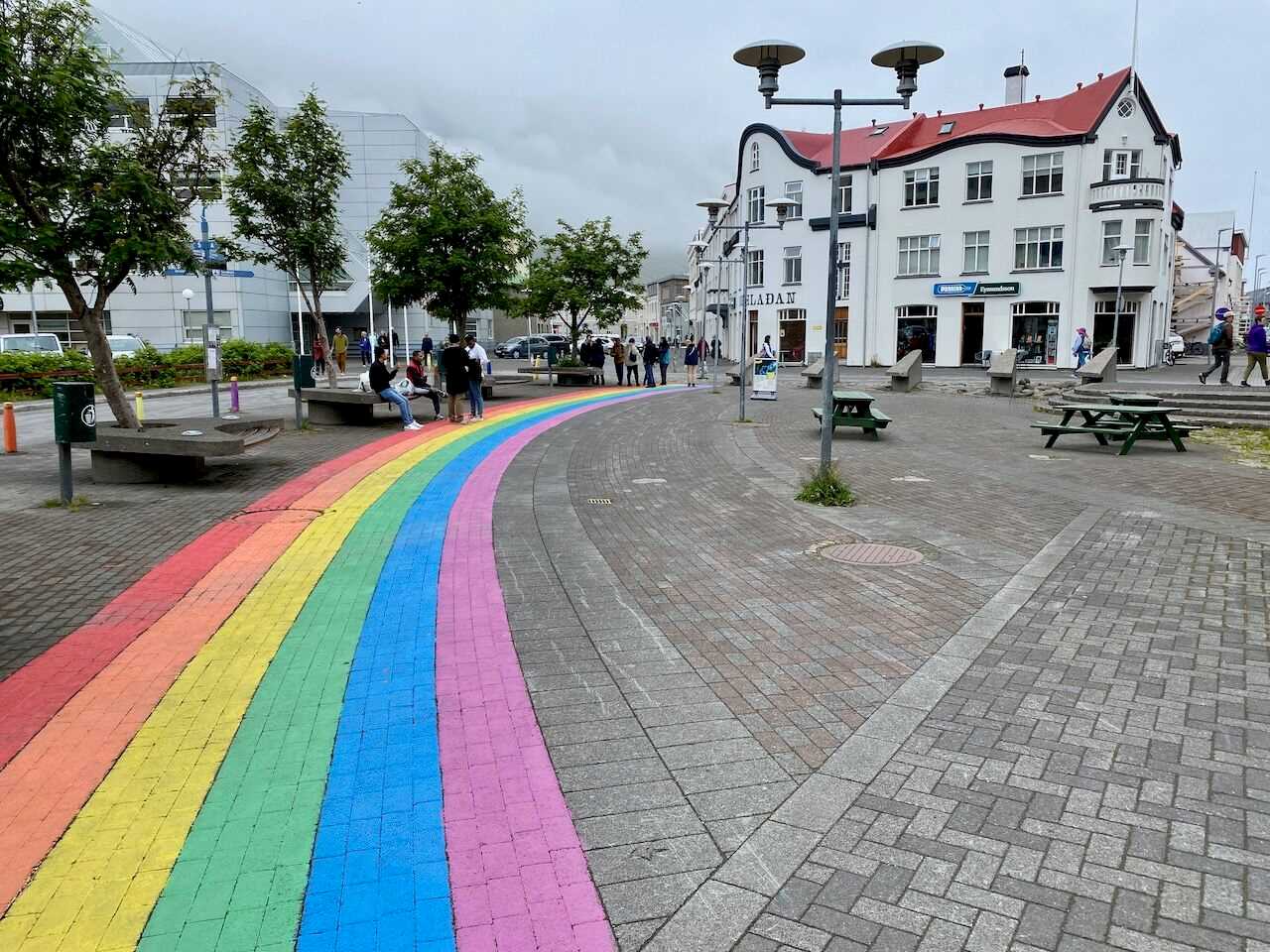
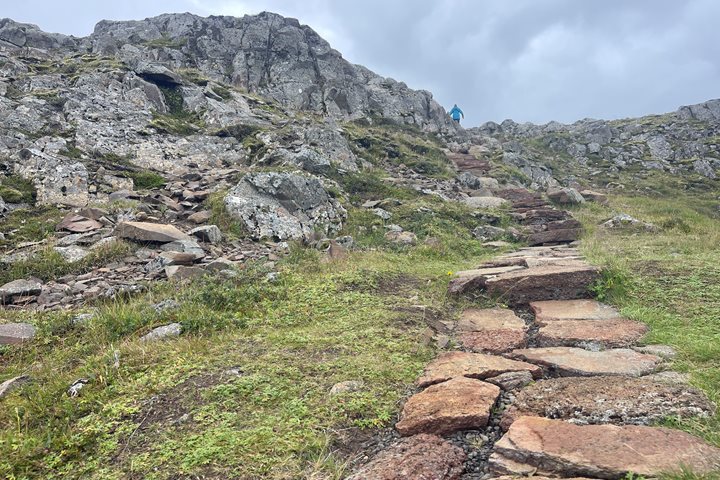
Morning in the small town of Isafjördur. The sky was gray, but it was not raining. This was good, as today was a day of many options: a bike ride, a hike, a bus tour with several stops including a garden, and a walk about town that ended at a brew pub. This was the morning. After lunch, we cruised the whale-rich waters of Isafjarðardjún in the West Fjords. Well, of course, we found some whales, and what a show these humpbacks provided. One individual repeatedly breached for over an hour. I’ve never seen that before!
Dennis has spent more than half of his life working with Lindblad Expeditions. He first studied biology in the Sonoran Desert. It was his work with the Arizona-Sonora Desert Museum that brought him into contact with Sven Lindblad. Dennis was working ...
After a cracking morning out at sea with some truly impressive waves, we were called up to the lounge by Expedition Leader Leah Eaton, who briefed us on a volcanic eruption that had just started on the Reykjanes peninsula. As the briefing concluded, we could already see the volcanic plume through which we would later sail on our way around the Reykjanes peninsula. We finally reached Reykjavík in the afternoon, where we had our final lounge briefing with our guest slideshow, a presentation on our final volcano plan, and a farewell speech from Captain Peik Aalto. After an early dinner, we mounted a trio of busses that carried us out onto the Reykjanes peninsula to an abandoned airstrip. From there we could already see the spectacular eruption very clearly, but to get a better look, we made our way onto some of the old storage bunkers which lined the airstrip. This gave us a view of the eruption in all its glory, with smoke billowing into the sky from the two-kilometer-long fissure, and also a number of smaller fires. It was a truly wonderous ending to an already incredible expedition.
The ship arrived in Djupivogur, located on the peninsula of the Austurland region, to windy and cool conditions. It made for a sporty Zodiac ride to the dock to start the day’s activities. The first group departed for the glacier lagoon tour. They finished nearly 13 hours later at a new location. Wow! Due to the increased wind as the day continued, the road closed and the buses were not able to return to the same harbor. Plan B, C, and D were implemented, and the group had a true expedition exploring new places beyond the original glacier. They arrived safely back on the ship full of stories and ready for the nightly entertainment performed by the crew’s one and only Spice Boys band. The guests that stayed in town, enjoyed a breezy black sand beach walk while others experienced the back roads in 4X4 jeeps. It was a wet and spicy Zodiac ride back to the ship where hot drinks and warm showers were the afternoon activity while the ship relocated to retrieve the bus tour guests. Recap and cocktail hour conversations were full of stories of being on a true expedition ship.
Today’s big adventure was a full day experiencing the Borgarfjordur Eystri area. This fjord is located on the east side of the island. The largest settlement is Bakkagerdi with ~100 residents. The town gets its name from the Alfaborg (Elf Rock) where many locals believe that the queen of the elves lives. Elves and trolls have been an ongoing theme in the sagas told by our Cultural Experts, Andreas and Claudia. The church in town has a painting by Johannes Sveinsson Kjarval of Jesus on the cross on Elf Hill. The local bishop refused to bless the painting due to Elf Hill being in it. Guests were able to explore the small town for half the day and the other half of the day hike or E bike in the surrounding areas. It was a beautiful day with a great balance of exercise, cool air, and relaxing independent exploration of the small town. The landing site for the Zodiacs is also home to a large puffin colony. Most puffins have already fledged, however we did see a few stragglers.